Currents of Change: Inspiring, Creating, Transforming

Currents of Change: Inspiring, Creating, Transforming

Thursday, 30 August 2012

A.D. Latornell Conservation Symposium Check Up


Has it really been 20 years?
 
By Chris Hachey, past Chair of Latornell Symposium
 
The A.D. Latornell Symposium (aka ADL) will be celebrating 20 years in 2013. That takes us back to 1993…Cheers was ending after 11 great seasons on television, Jean Chrétien became prime minister of Canada with a massive majority, Jurassic Park was at the movies and Dyson sold the first bagless cyclonic vacuum cleaner. 

When I think back about the ADL, I remember the many fascinating key note speakers who motivated my career.  The person I remember the most was a 14 year old boy named Ryan Hrljack from Ottawa. The conference theme was “Clean Water” and we had the chance to approach many scientific and well respected speakers but we chose Ryan. As a boy at the age of 8 he raised $80 to build a well in Africa to help provide clean water. At 14, Ryan raised over $1 million dollars, traveled to Africa four times, met the Queen, the Pope, World leaders, and even appeared on Oprah twice. Ryan stood up on the ADL stage and told his story and his small part in helping to provide clean water to the people of Africa. Let me tell you, 700 people that evening didn’t learn anything new about the science of clean water. But, in the 12 years of the conference nothing since has ever moved people to stand up and applaud like they did that evening. I was inspired!   

As the ADL approaches this historic milestone there are a number of questions that we need to discuss. Does the ADL meet your needs as a conservation professional?  What is the number one reason why you attend the ADL? How important are the networking opportunities? If you could change just one thing what would that be? 

We have a special webpage set up on the Latornell Symposium’s website so you can see what we’ve accomplished over the years and provide us with your feedback and advice about moving forward.

So what’s your story? 


Chris Hachey is the Land Manager Coordinator at the Grey Sauble Conservation Authority.  He was the Chair of the Latornell Symposium for two years in 2004 and 2005, as well as being an active member of the steering committee for some time before and after. 

Monday, 27 August 2012

Great food and career affirmations: The musings of a Latornell Grant recipient


By Kim Ootjers, 2011 A.D. Latornell Symposium Grant recipient
 

Before applying for the A.D. Latornell Conservation Symposium Grant I had no idea what to expect. Would this be another conference with dry, boring talks mostly irrelevant to my interests and job duties? Would there be too much free time and too little to do with it? Would any of the exhibitors have information I could use? Would the food be gross?

Thankfully, Latornell was the opposite of all these fears. From the minute I walked into the Nottawasaga Inn and checked into my room I knew I was in for an exceptional three days. There were moments of confusion – trying to get from the dining hall to my room and back down to a workshop without taking the wrong set of stairs – and moments where I was overwhelmed – walking into the exhibitors hall for the first time to swarms of participants and exhibitors exchanging information, all of which I wanted to participate in. But through all this there was the feeling of being part of a small-knit community of like-minded individuals. Whether it was eating breakfast with a Conservation Authority CAO, chatting with fellow grant recipients at a wine and cheese reception, or listening to a workshop on urbanization and aquatic ecosystems, every interaction was saturated by a desire to change, improve, and make a difference.

Latornell packs so much information into three days that there isn’t enough time to truly absorb and embrace it all. Each workshop period gave seven options, and I was always extremely excited about at least three, and disappointed that I couldn’t attend them all. The keynote speakers provided inspiration, amusement and interesting meal-time dialogue, while the exhibitors displayed a wide variety of information relevant to the diverse crowd gathered in the hall.

Like the conference itself, the grant application process was well run and straightforward. Although I wasn’t sure how stiff the competition was, I spent a long time crafting my application answers to ensure that the organizers knew just how much I would benefit from this experience.  However, the effort more than paid off for the experience I received. The people I met, the presentations I heard and the discussions I had resulted in me having a much greater appreciation for how broad and far-reaching conservation efforts are. Beyond that it confirmed for me that the career path I’m on is exactly the one I want to be on.

If you are debating whether or not to apply for the grant, apply. Opportunities to attend a Symposium like this are few and far between and the benefits you receive from the experience are above and beyond what you will expect. And just wait until you see what they serve for lunch…


Kim Ootjers is  a Natural Heritage Technician at Conservation Halton and a 2011 A.D Latornell Conservation Symposium Grant recipient.

Wednesday, 27 June 2012

What's on the Menu?

By Ashley Noseworthy, Nottawasaga Inn Resort & Conference Centre

 
In recent years we’ve seen a very interesting food trend surface through the adoption of an eat local philosophy.  There are so many benefits to eating locally – fresher food, support for the local economy and the opportunity to make a connection with the farmer who is growing what you’re eating – that it’s not difficult to understand why people are becoming more invested in learning about where the food they eat is coming from.      

It’s exciting when groups such as A.D. Latornell hold an event at the hotel because their local food philosophy mirrors our own desire to include foods from Ontario (whenever possible) into our menus.  

I was curious to find out more about the local foods we incorporate into the menus we serve so I decided to interview our Head Chef, Paul Dills.

Ashley:  Why do we purchase local food?

Chef:  I try to buy local whenever possible.  Purchasing locally makes sense because not only is it important to support our local food growers but the food comes at its freshest.  It also reduces our impact on the environment (fewer resources are being used in the shipping process) which is important as the hotel tries to be environmentally responsible whenever possible. 

Ashley: What foods do we source locally?

Chef:  I purchase local foods as they are in season and then create menus that reflect the flavours of the time of year.   Often the food within our fridges comes from a variety of farms within Ontario [he walks me through the fridge for a tour].  We have carrots and beets from Bradford, potatoes from Grand Bend, cucumbers and tomatoes from the Niagara Region, butter and greens from the Alliston area, turkeys from Thamesville and the list goes on.  If I have the opportunity to purchase from a farm local to Ontario it’s always my first choice.

Ashley:  What made you decide to start a garden at the resort?

Chef:  I’m passionate about interesting types of vegetables and starting my own garden allows me to have access to varieties that I may not be able to purchase regularly.  There’s nothing better than being able to step outside and pick herbs and vegetables fresh from the garden.      

A delicious (and thriving) selection of herbs from our garden

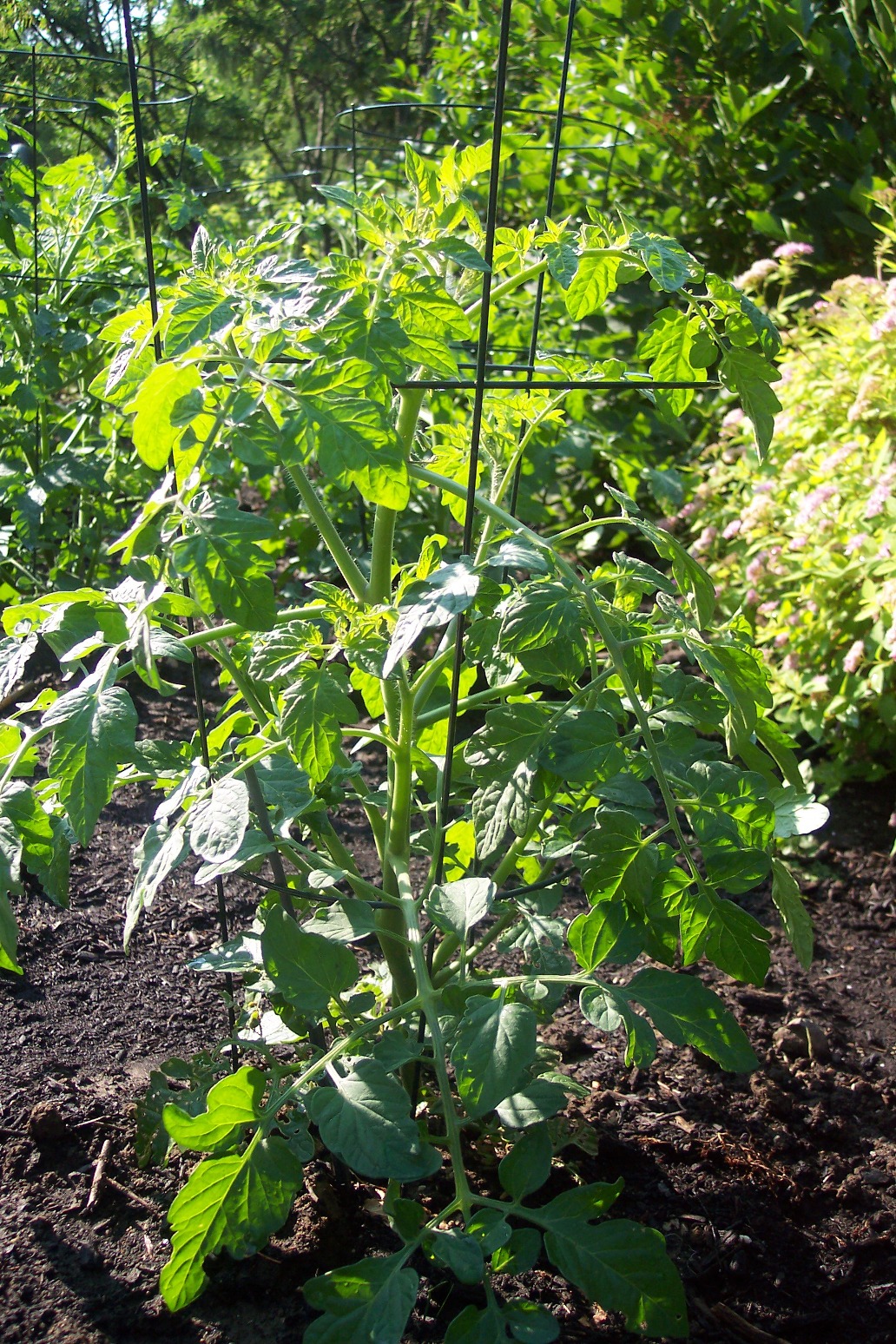
This healthy tomato plant will soon yeild a crop of
Yellow Pear Mini Heirloom Tomatoes
Ashley: How do you decide on the menus for the A.D. Latornell Conservation Symposium?

Chef:  Within the fall and winter months the local foods that are available tend to be root vegetables (as they can be stored) and meats.  For the A.D. Latornell menu I will infuse a selection of hearty fall and winter vegetables (parsnips, potatoes, squash, carrots, etc) to showcase the colourful and interesting combinations of the fall and winter harvest.

To highlight some of the delicious flavours that are in season right now, Chef Paul Dills has created an Asparagus Frittata recipe that includes ingredients that can be sourced locally within your own area.  Enjoy! 


Recipe: Asparagus, Leek & Goat Cheese Frittata
(Serves 4)
  • 2 tablespoons butter
  • 1 cup chopped leeks (white and pale green parts only)
  • 1 12-ounce bunch thin asparagus, trimmed, cut on diagonal into 1-inch pieces
  • 8 large eggs
  • 1 cup goats cheese
  • 1/2 teaspoon salt
  • 1/2 teaspoon ground black pepper
  • 1/4 cup grated Parmesan cheese
Preheat broiler. Melt butter in heavy broiler proof 10-inch-diameter non-stick skillet over medium heat. Add leeks and sauté 4 minutes. Add asparagus, sprinkle lightly with salt, and sauté until tender, about 6 minutes. Whisk eggs, 3/4 cup goats cheese, 1/2 teaspoon salt, and 1/2 teaspoon pepper in medium bowl. Add egg mixture to skillet; fold gently to combine. Cook until almost set. Sprinkle remaining 1/4 cup goats cheese and Parmesan cheese on top. Broil until frittata is puffed and cheese begins to turn golden, about 3 minutes. Cut into wedges and serve.


Ashley Noseworthy is the Marketing & Event Coordinator at the Nottawasaga Inn Resort & Conference Centre located in Alliston, ON.  The 2012 A.D. Latornell Conservation Symposium will be held at the Nottawasaga Resort on November 14-16, 2012.